
Quick answer: Independent used car dealers averaged $1,921 in gross profit per vehicle in the first quarter of 2025, based on NIADA data presented at the 2025 NIADA Convention. NIADA reported F&I gross separately, at $1,525. Gross isn’t what the owner keeps. Payroll, rent, advertising and floor plan interest all come out of it, so the net on each car is smaller and swings a lot from one lot to the next.
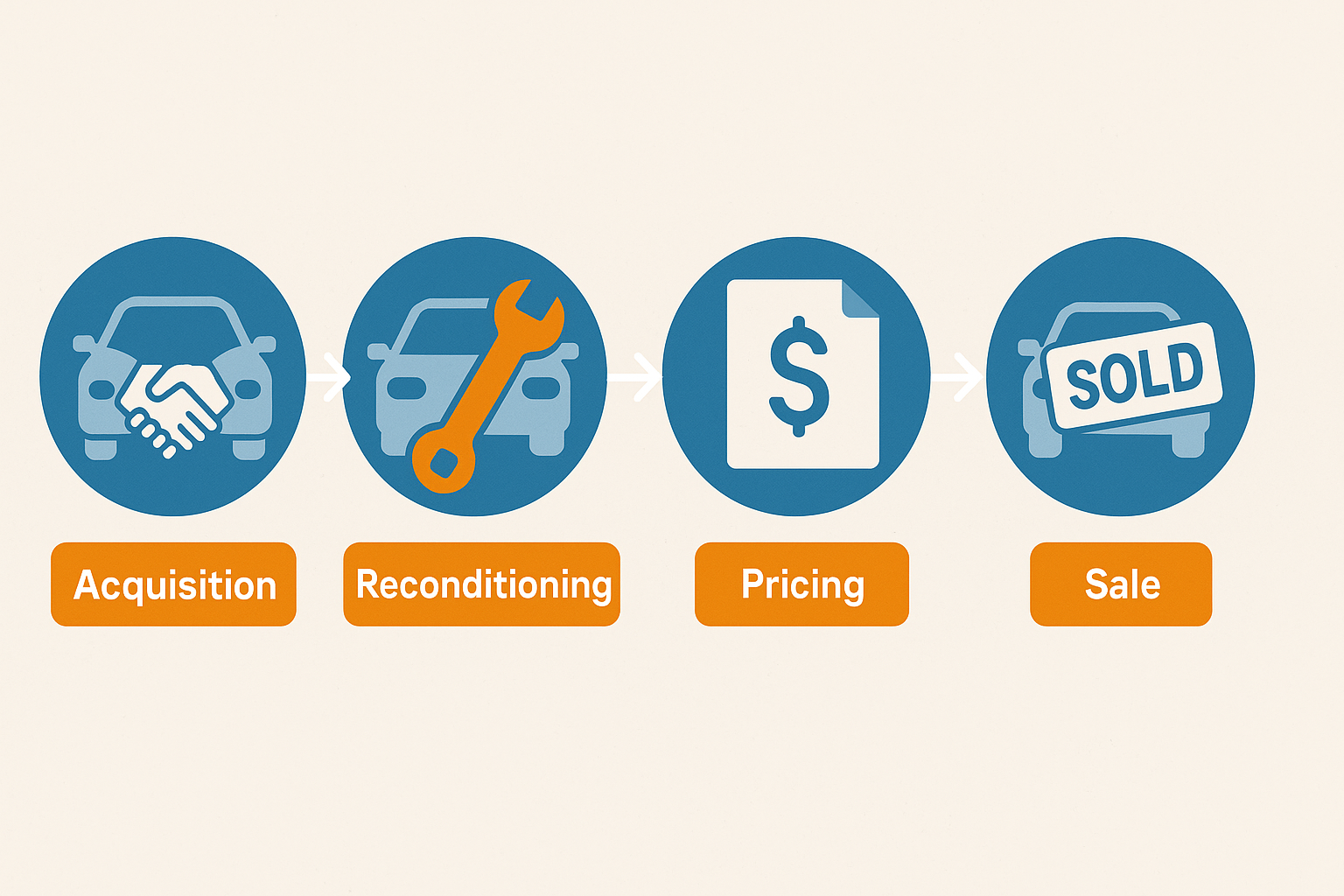
Most of what a used car dealer makes on a car is decided before it hits the lot. What you paid, what recon cost and how long it sat matter more than how hard anyone negotiated at the desk. Below is how the money works on one car, with a worked example you can swap your own numbers into.
Gross profit vs. net profit on a used car
When dealers talk about what they “made” on a car, they usually mean gross. There are two kinds, and then there’s net.
- Front-end gross: the sale price minus everything you have in the car. That’s the purchase price, auction or transport fees, and reconditioning.
- Back-end gross: what the F&I office earns on the deal. That includes dealer reserve on the loan and products like service contracts and GAP.
- Net profit: what’s left after you pay to run the store. Salaries, commissions, rent, insurance, floor plan interest, advertising and software all come out here.
Keep these separate when you compare numbers. A dealer who says they make “$3,000 a car” might mean front-end gross, total gross, or net. Those are very different businesses.
Front-end profit: what the car itself earns
Used cars don’t come with a sticker price from the factory, so the dealer sets both sides of the deal. You decide what to pay and what to ask, and that cuts both ways. Overpay at the auction or on a trade, and no amount of selling gets that money back.
Front-end gross on a given car comes down to four things:
- How close your buy price was to what the car will actually retail for in your market
- Whether recon came in on budget
- How long the car sat before it sold
- How many price cuts it took to move it
Back-end profit: F&I on a used car deal
When a buyer finances through the dealership, the lender often shares part of the finance charge with the dealer. That’s called dealer reserve. On top of that, the F&I office can offer service contracts, GAP and other protection products. Each one the customer buys adds to back-end gross.
Not every customer finances, and not every financed customer buys a product. So back-end gross is an average across all your deals, not a number you get on every car. NIADA’s first-quarter 2025 figure for F&I gross was $1,525, up 17.1% from the year before.
Worked example: what a dealer makes on one car
Illustrative example only. These numbers are made up to show the math. They aren’t industry averages, and your costs will be different.
Say you buy a 2019 midsize sedan at auction and retail it 40 days later.
| Line item | Amount |
|---|---|
| Purchase price at auction | $14,200 |
| Auction buy fee and transport | $450 |
| Reconditioning (tires, brakes, detail) | $1,100 |
| Total cost in the car | $15,750 |
| Retail sale price | $18,750 |
| Front-end gross | $3,000 |
| F&I gross (financed deal, service contract and GAP) | $1,000 |
| Total gross on the deal | $4,000 |
| Sales commission | -$500 |
| Floor plan interest (40 days) | -$150 |
| Profit on the car before overhead | $3,350 |
| Share of monthly overhead ($30,000 a month across 20 cars sold) | -$1,500 |
| Net profit on this car | $1,850 |
The overhead line is the one people forget. Rent, salaries, insurance and advertising don’t care how many cars you sold this month. Spread them across fewer cars and every car has to carry more.
The same car, bought badly
Illustrative example only. Same sedan, same lot, made-up numbers.
This time the appraisal missed a few local comps, so you paid $700 more. Recon found a worn suspension part nobody caught at the sale. The car sat 95 days and took two price cuts.
| Line item | Good buy | Bad buy |
|---|---|---|
| Purchase price | $14,200 | $14,900 |
| Auction buy fee and transport | $450 | $450 |
| Reconditioning | $1,100 | $1,700 |
| Retail sale price | $18,750 | $17,500 |
| Front-end gross | $3,000 | $450 |
| F&I gross | $1,000 | $1,000 |
| Sales commission | -$500 | -$300 |
| Floor plan interest | -$150 (40 days) | -$350 (95 days) |
| Share of overhead | -$1,500 | -$1,500 |
| Net profit | $1,850 | -$700 |
Same car, same F&I result, and the deal went from a solid profit to a loss. The difference was $700 at the buy, $600 in recon and 55 extra days on the lot. That’s why most of a used car dealer’s profit is made, or lost, when the car is bought.
Used car dealer profit margin
Margin is profit divided by the sale price. In the good-buy example above, front-end gross was $3,000 on an $18,750 sale, a 16% gross margin on the car. Net profit was $1,850, about 9.9% of the sale price. In the bad-buy example, net margin was negative.
Those percentages come from made-up numbers, so don’t treat them as a benchmark. When someone quotes a margin, ask whether they mean gross or net, and whether F&I is in it. For real benchmarks, NIADA publishes an annual Used Car Industry Report with figures for independent dealers.
How much does a used car dealer make a year?
Multiply your average net per car by the cars you sell. If every car went like the good-buy example, a lot selling 20 a month would net about $37,000 a month before taxes. Real lots mix good buys with bad ones, aged units that go to wholesale, and slow months, so the actual number lands below that.
Volume matters more than it looks. Fixed costs stay roughly the same whether you sell 15 cars or 25, so each extra car you sell carries less overhead and keeps more of its gross.
New car vs. used car dealer profit
New car dealers sell from a manufacturer’s sticker price, and shoppers can look up the invoice. That leaves less room on the car itself, so franchised stores lean on F&I, service and parts, and manufacturer programs. Used car dealers have no sticker to work from. They set their own buy and sell prices, which is why buying well matters so much more on the used side.
What cuts into profit per car
- Overpaying at the buy. A thin appraisal or a bidding war at auction costs you before the car is even on the truck.
- Recon surprises. Tires, brakes and mechanical issues that weren’t in the plan come straight out of front-end gross.
- Days on lot. Every day a car sits adds floor plan interest, and the car keeps losing value.
- Pricing too high, then cutting. A car priced above the market sits, and the cuts that follow usually cost more than pricing it right on day one.
- Wholesale losses. Aged units sent back to auction often sell for less than you have in them.
How Carketa helps you make more per car
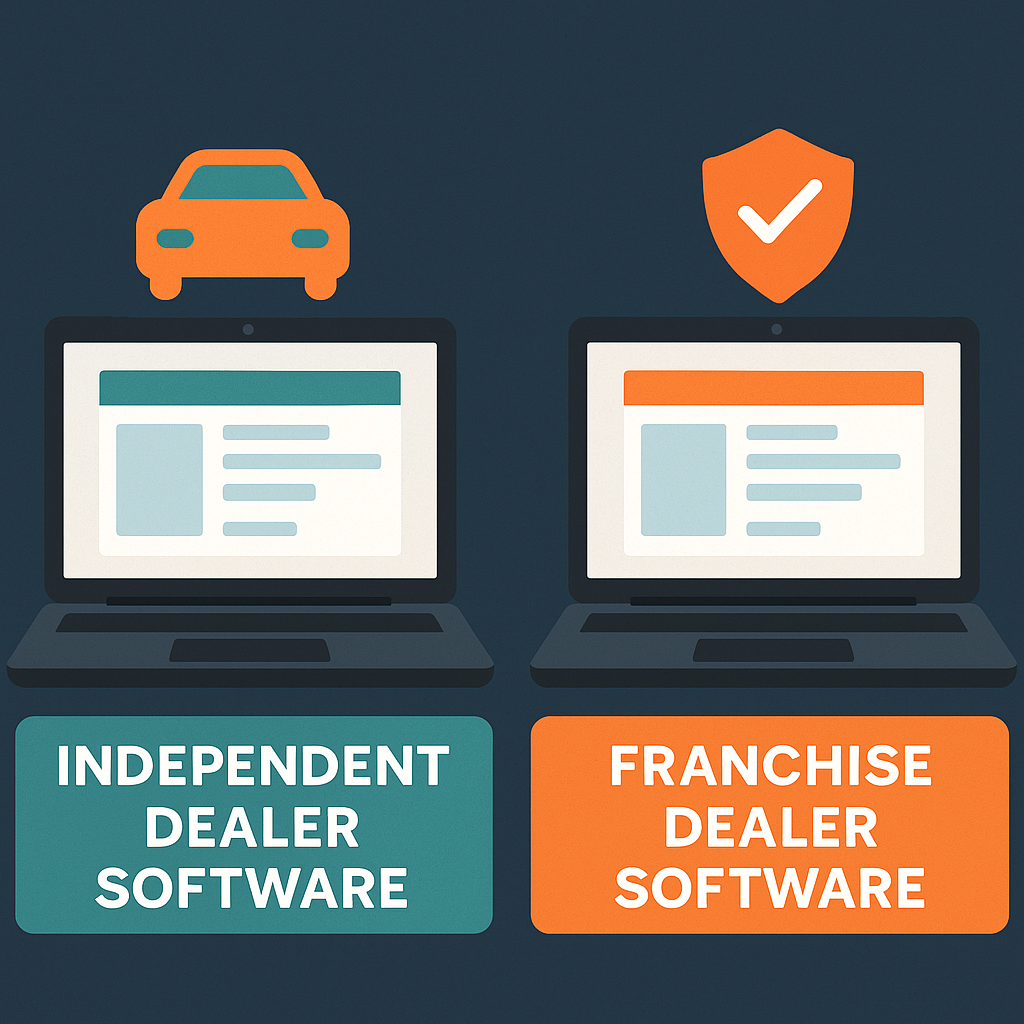
Carketa isn’t a DMS. It’s software for the buying and turning side of a used car lot, and it connects to the DMS you already use for deals and accounting. It’s built around the parts of the deal where the examples above went right or wrong:
- Buying inventory: search auctions for the year, make and model combinations that sell in your market, with an ROI view that builds in recon and transport costs before you bid.
- Appraising: VIN scanning, book values and local market comps in one screen, so trade-in and auction offers start from real data.
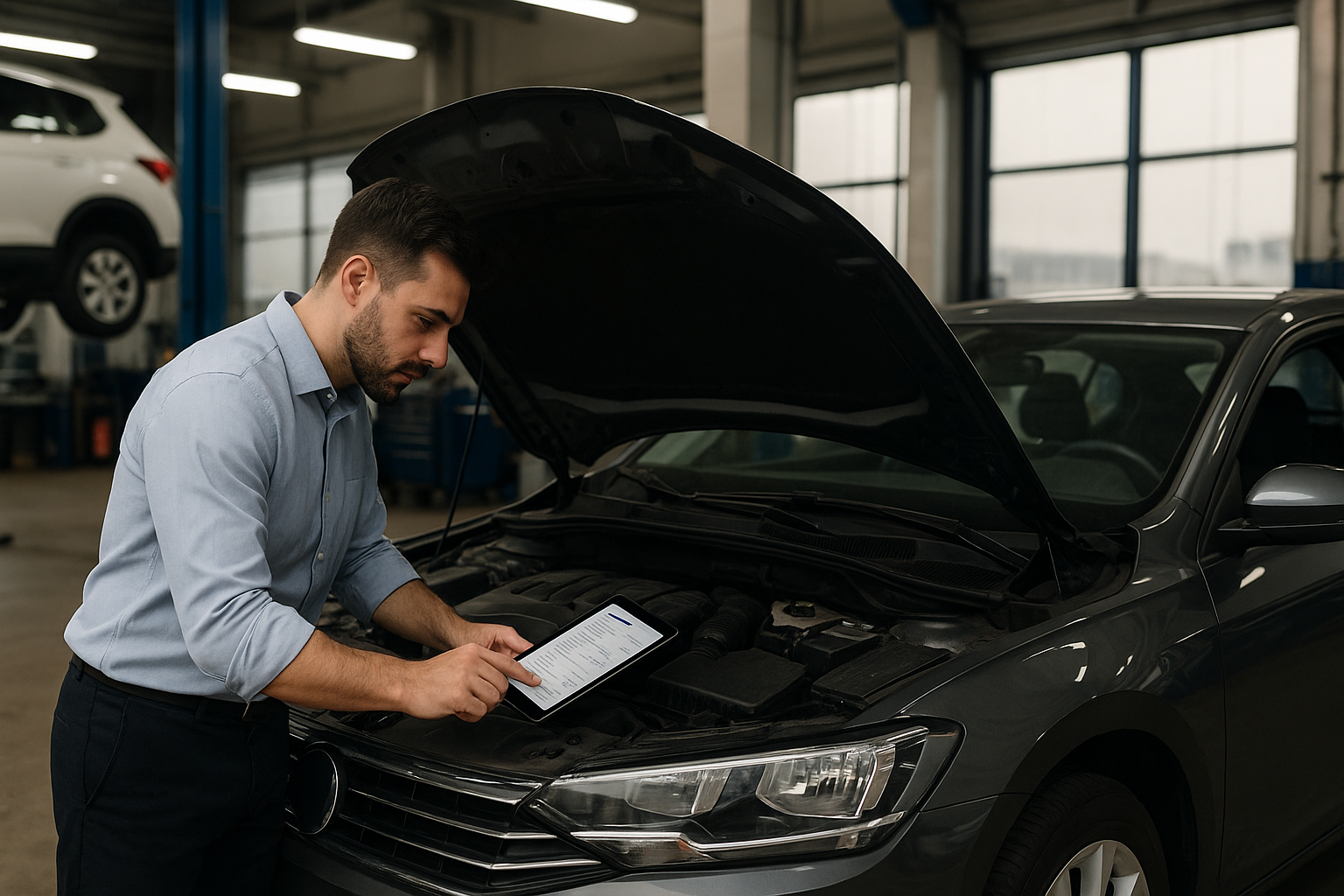
- Reconditioning: recon tasks and status for every car, so you can see what’s holding a unit back from the front line.
- Pricing inventory: price-to-market data so you can price right the first time instead of cutting later.
FAQ
How much does a dealer make on a used car?
NIADA reported that independent retail dealers averaged $1,921 in gross profit per vehicle in the first quarter of 2025, with F&I gross reported separately at $1,525. That’s before operating expenses. Net profit per car depends on the dealer’s overhead and volume.
What’s the difference between front-end and back-end profit?
Front-end profit is the sale price minus what the dealer has in the car, including purchase price, fees and reconditioning. Back-end profit comes from the F&I office: dealer reserve on financing plus products like service contracts and GAP.
What is a good profit margin for a used car dealer?
There’s no single number, because margins depend on the cars you sell, your market and your overhead. Always check whether a quoted margin is gross or net and whether it includes F&I. NIADA’s annual Used Car Industry Report is the best public benchmark for independent dealers.
Do car dealers make more on new or used cars?
Used cars usually leave more room on the car itself, because the dealer sets both the buy price and the sale price. New car pricing starts from a manufacturer’s sticker and an invoice shoppers can look up, so new car dealers rely more on F&I, service and manufacturer programs.
Keep reading: Maximizing profit margins on used cars and pricing strategies for car dealers.